

In the world of engineering, manufacturing, and fluid control, precise terminology is the foundation of safety and efficiency. If you work with pressure systems, valves, or gauges, you have likely encountered the terms PSI and PSIG. While they look similar, using them interchangeably can lead to critical errors in system design and operation.
In this guide, we will break down the difference between PSIG and PSI, explore their applications, and explain why understanding this distinction is vital for anyone working with pressurized systems.
What is PSI?
PSI stands for Pounds per Square Inch. It is a fundamental unit of pressure used to quantify the amount of force (in pounds) applied to one square inch of surface area.
However, the term “PSI” by itself is generic. Because pressure is always a comparison between two points, stating just “PSI” can be ambiguous. Generally, when people use “PSI” in casual conversation, they are referring to the pressure relative to the ambient atmospheric pressure—but technically, this is only half the story. To be precise, we must specify whether we are measuring from a perfect vacuum or from the air around us.
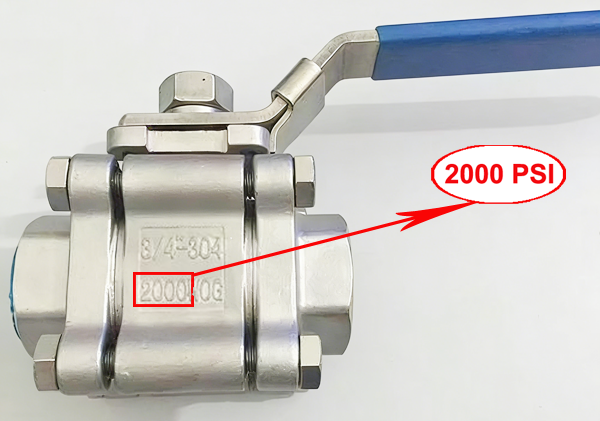
What is PSIG?
PSIG stands for Pounds per Square Inch Gauge. This is the pressure reading you see on a standard pressure gauge.
The “G” is the most important part of this acronym. It specifies that the measurement is relative to the ambient atmospheric pressure. In simple terms, PSIG tells you how much *more* pressure is in a system than the air pushing on it from the outside.
- The Zero Point: On a PSIG scale, “0 PSIG” does not mean there is a complete absence of pressure. Instead, it means the pressure inside the system is equal to the atmospheric pressure outside (approximately 14.7 PSI at sea level).
- Real-World Analogy: If you inflate a car tire and a gauge reads 32 PSIG, that means the air inside is 32 pounds per square inch *above* the atmospheric pressure.
Key Differences Between PSIG and PSI
The core difference between these two terms lies in their reference point.
Feature |
PSI (Pounds per Square Inch) |
PSIG (Pounds per Square Inch Gauge) |
|---|---|---|
| Reference Point | Ambiguous (Often used as a blanket term, but technically “absolute” when specified as PSIA). | Atmospheric Pressure (14.7 psi at sea level). |
| What it Measures | Total pressure including the earth’s atmosphere. | Pressure above or below the surrounding atmosphere. |
| Typical Use | Scientific calculations, gas laws, vacuum systems. | Industrial gauges, tire pressure, hydraulic systems. |
| Value at Sea Level | 14.7 PSIA (Absolute) | 0 PSIG |
> *Note: While “PSI” is often used colloquially, in strict scientific contexts, pressure including the earth’s atmosphere is referred to as PSIA (Absolute).*
To visualize this, imagine a sealed pipe. If you remove all air molecules to create a perfect vacuum, you have 0 PSIA (Absolute). If you open that pipe to the air at sea level, the pressure inside rises to 14.7 PSIA, which is read as 0 PSIG.
Applications of PSI in Various Industries
When used in its absolute form (often denoted as PSIA), this measurement is critical in applications where changes in altitude or atmospheric conditions could affect the process.
1. Aerospace and Aviation: Altimeters and cabin pressurization systems rely on absolute pressure readings to ensure safety at high altitudes.
2. Vacuum Technology: In systems designed to create a vacuum, scientists measure how far they have descended from atmospheric pressure toward a perfect vacuum, which requires absolute pressure scales.
3. Food Packaging: Modified Atmosphere Packaging (MAP) often uses absolute pressure calculations to ensure the correct gas mixture is sealed inside a package regardless of the weather or plant elevation.
4. HVAC Refrigeration: Technicians use manifold gauges that read in PSIG, but when calculating superheat and subcooling for system charging, they often convert to absolute pressure (PSIA) for precise thermodynamic property matching.
Applications of PSIG in Various Industries
Because the world we live in is under constant atmospheric pressure, PSIG is the most practical measurement for everyday industrial equipment. Valves, pumps, and pipes are typically rated in PSIG because they must withstand pressure *differential*.
1. Valve Manufacturing: When a high-pressure valve spec sheet lists a maximum pressure of 150 PSIG, it means the valve can handle an internal pressure 150 psi higher than the outside air. If that valve were taken to the top of a mountain, its effective capacity would change, which is why PSIG is the standard rating.
2. Hydraulic Systems: Construction equipment, like excavators and lifts, use PSIG to measure the force of hydraulic fluid. The gauge shows the pressure generated by the pump above atmospheric pressure.
3. Water Treatment Plants: Operators monitor PSIG to ensure pipelines and filtration tanks are not over-pressurized.
4. Pneumatic Tools: Impact wrenches and air compressors are rated in PSIG. A compressor tank storing air at 100 PSIG holds air that is 100 psi denser than the outside air, ready to do work.
Importance of Understanding Pressure Measurements
For a valve factory or an industrial buyer, confusing these terms can be expensive and dangerous.
- Safety Risks: If a valve is rated for 150 PSI (interpreted as Absolute), and you install it in a system running at 135 PSIG, you are actually subjecting it to roughly 149.7 PSIA (135 PSIG + 14.7 atmospheric). You would be operating dangerously close to the failure point.
- System Efficiency: Pumps and compressors rely on pressure differentials to move fluids. If you design a system using absolute numbers when you meant gauge numbers, the pump may not have enough power to overcome the elevation or friction in the pipes.
Common Misconceptions About PSI and PSIG
1. PSI is the same as PSIG.
This is false. In many industrial contexts, “PSI” is used as a colloquial catch-all, but technically, if a number comes from a standard dial gauge, it is PSIG. If it is a theoretical calculation involving vacuums or gas laws, it is likely PSIA.
2. Atmospheric pressure is negligible.
While 14.7 PSI might seem small compared to a 3,000 PSI hydraulic system, it is vital in low-pressure systems (like ventilation or gas delivery) and absolutely critical in high-precision engineering.
How to Convert Between PSIG and PSI (Absolute)
To accurately switch between gauge pressure and absolute pressure, you need to account for atmospheric pressure.
The Formula:
- PSIA = PSIG + 14.7 (Atmospheric pressure at sea level)
- PSIG = PSIA – 14.7
Example:
If a pressure vessel shows a reading of 50 PSIG on a gauge:
- Absolute Pressure (PSIA) = 50 + 14.7 = 64.7 PSIA
*Note: For high-precision work or locations at high altitudes, the standard 14.7 psi value must be adjusted to the local barometric pressure.*
Frequently Asked Questions About PSI and PSIG
Is PSI the same as PSIG?
No. PSI is a general term for pounds per square inch. PSIG specifically refers to pressure measured relative to atmospheric pressure (gauge pressure). If someone says “PSI” regarding a gauge reading, they almost always mean PSIG.
How do I convert PSIG to PSIA?
Add the atmospheric pressure (14.7 psi at sea level) to the PSIG value. Formula: PSIA = PSIG + 14.7.
Why are valves rated in PSIG instead of PSI?
Valves are rated in PSIG because they must withstand the pressure difference between the inside of the pipe and the outside atmosphere. This differential is what causes stress on the valve body.
Conclusion: Choosing the Right Pressure Measurement for Your Needs
Understanding the difference between **PSIG and PSI** is more than just technical trivia—it is a necessity for safety and precision in fluid control.
- If you are looking at a gauge on a tank, pipe, or valve: You are looking at PSIG.
- If you are performing scientific calculations or working with sealed systems: You need PSIA (Absolute PSI).
At NSW VALVE MANUFACTURER , we design our products to withstand the rigorous demands of real-world industrial applications. All our pressure ratings are clearly labeled in PSIG to help you select the right valve for your specific operating conditions. If you have questions about pressure ratings for your next project, contact our engineering team today.
Post time: Mar-02-2026