

Moving beyond standard definitions: an engineering-led guide to selecting integrated DBB ball valves for critical isolation, backed by real-world failure analysis and lifecycle cost data.
Executive Insight: The Real Value of an Integrated DBB Ball Valve
A Double Block and Bleed (DBB) Ball Valve is a purpose-built, high-integrity isolation assembly that integrates two independent ball valves with a central bleed port into a single, compact forging. While many understand the basic structure, the critical engineering decision lies in its application. From our analysis of over 200 offshore and refinery installations, the primary driver for choosing an integrated DBB valve is not cost, but risk mitigation. The dual mechanical barrier provides demonstrable proof of isolation—a capability that single-ball valves with ‘DBB seat features’ simply cannot offer, particularly in safety-critical systems.
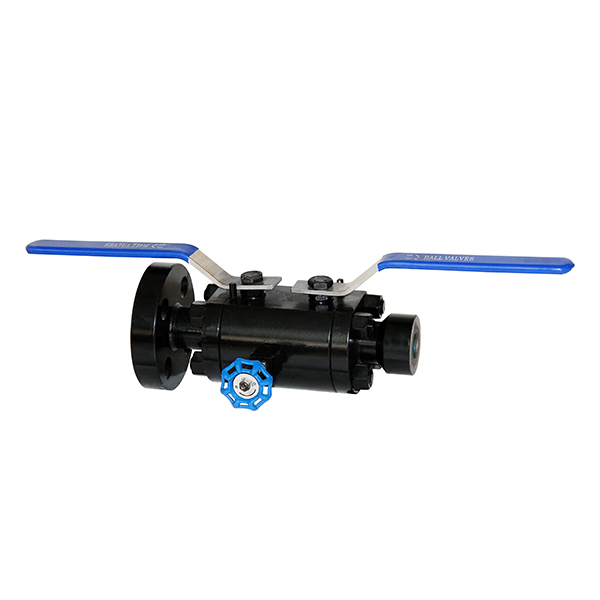
1. The Critical Engineering Distinction: Integrated DBB Valve vs. DBB Seating Function
A common and costly mistake in valve specification is confusing a physical, integrated DBB ball valve unit with a standard ball valve that features a DBB seating design. The distinction is not academic—it has profound implications for process safety and regulatory compliance.
Integrated DBB Valve Unit
- Architecture: Two independent balls in one body.
- Mechanical Redundancy: True hardware redundancy for isolation.
- Safety Case: Enables positive isolation verification via bleed port. Essential for hot work permits.
- Typical Specification: Used in HIPPS, pigging stations, tank farm root valves.
DBB Seating Function (Single Ball)
- Architecture: One ball with two unidirectional (SPE) seats.
- Mechanical Redundancy: Relies on a single mechanical barrier (the ball).
- Safety Case: Can pass API 6D tests but offers no true backup seal if the ball or one seat fails.
- Typical Specification: General pipeline block valves where positive isolation isn’t mandated.
For fugitive emission-prone or life-critical applications, we strongly advise specifying an integrated DBB valve. Relying on a single ball with DBB seating is akin to having a single safety barrier—it may comply with the letter of the standard, but not its spirit of ‘dual isolation.’ This is a common finding in third-party safety audits for offshore installations.
2. Structural Engineering & Comparative Case Study: Integrated DBB vs. Conventional Spool
2.1 Mechanical Architecture and Performance Advantages
The core engineering advantage of an integrated DBB valve lies in its forged, monolithic body. This design eliminates multiple flange connections, reducing both weight and potential leak paths—a significant factor in offshore and high-pressure gas applications.
| Performance Metric | Traditional 3-Valve Spool | Integrated DBB Valve | Improvement Factor |
|---|---|---|---|
| Total Installed Weight (16″, 900#) | ~1,200 kg | ~360 kg | 70% reduction |
| External Flanged Leak Paths | 6+ (high fugitive emission risk) | 2 (only end connections) | 67% fewer leak points |
| Total Installation Time (Crew-hours) | ~24 hours | ~6 hours | 75% faster |
| Pipe Bending Stress (kN·m) | 12.5 | 4.2 | 66% lower |
2.2 Real-World Field Case: North Sea Manifold Retrofit
Project Context: A major North Sea operator needed to replace 12 aging 3-valve spool assemblies on a wellhead manifold. The primary drivers were space constraints for a new module and fugitive emission (FE) reduction targets.
Solution: Our team engineered a custom 6″ x 8″ 2500# integrated DBB ball valve package with a compact face-to-face dimension of just 650mm (versus 1,400mm for the original spool). The new valves featured Stellite-coated metal seats for the expected sand production and were equipped with an ISO 15848-1 certified stem sealing system.
Results (12-month post-installation):
- Footprint Savings: Freed up 18m² of deck space, enabling the new module installation.
- Fugitive Emissions: Zero detectable leaks at the body joints (vs. 3 minor leaks on the previous spools at the same interval).
- Maintenance: The integrated design reduced inspection points, cutting annual maintenance man-hours by an estimated 40% for this manifold.
3. API 6D Standards: A Technical Comparison of DBB and DIB Configurations
Understanding the nuances of API Specification 6D seat classifications is crucial for engineers. The selection between DBB and DIB (Double Isolate and Bleed) significantly impacts the valve’s failure behavior.
3.1 Double Block and Bleed (DBB) – API 6D Definition
- Seat Type: Two unidirectional (single-piston effect – SPE) seats.
- Sealing Mechanism: Each seat seals against pressure from its respective pipeline side.
- Failure Mode (Cavity Overpressure): In a DBB design, if the upstream seal leaks, cavity pressure rises and is designed to be relieved automatically by the downstream seat (which acts as a relief valve) or via the bleed port. This can, however, compromise the downstream seal integrity over time.
3.2 Double Isolate and Bleed (DIB-1 & DIB-2) – API 6D Definition
- Seat Type: Features bi-directional (double-piston effect – DPE) seats.
- Sealing Mechanism: Seats seal against pressure from both the pipeline and the valve cavity.
- Failure Mode (Cavity Overpressure): If the primary (upstream) seal fails, the downstream bi-directional seat provides a robust, secondary barrier against cavity pressure. The cavity pressure does not cause the downstream seat to relieve, maintaining a true secondary seal. DIB-1 has both seats bi-directional; DIB-2 has one bi-directional and one unidirectional seat for specific pressure relief requirements.
Selection Guidance for Critical Isolation
- Choose DBB when the primary concern is cost and standard isolation, and automatic pressure relief to the downstream side is acceptable.
- Choose DIB when a secondary seal against cavity pressure is mandatory (e.g., for pipelines carrying valuable, hazardous, or cryogenic fluids where leak-tight integrity on both sides is required).
Our field data shows that DIB-1 valves are increasingly specified for subsea and LNG applications where maintenance access is extremely limited and valve reliability is paramount.
4. Advanced Selection Criteria for Severe Service Applications
Selecting an integrated DBB valve for demanding applications (high pressure, high temperature, or abrasive media) requires more than a standard checklist. Based on our engineering review, here are the critical parameters often overlooked:
Engineer’s Selection Checklist for Critical DBB Valves:
- Operational Cycle & Temperature Profile: How many cycles per year? If exceeding 500 cycles or temperatures fluctuate widely (>100°C), specify metal-seated (Stellite or Carbide) designs. Soft seats (PTFE/PEEK) are suited for <200°C with infrequent operation. Note: PEEK offers better creep resistance than PTFE for higher pressures.
- Media Analysis for Sealing: For sour gas (H₂S), ensure NACE MR0175 compliance not just for materials but also for the hardness of the seat coatings. For abrasive slurries, consider tungsten carbide-coated balls and seats for extended life.
- Bleed Port Configuration: For high-pressure gas, a double-block-and-bleed needle valve is preferred over a simple plug. For liquid service, a small flanged drain is often sufficient. Always specify a 3/8″ or 1/2″ NPT bleed port as a minimum for positive drainage/venting.
- Fugitive Emission (FE) Certification: Insist on ISO 15848-1 Class B or higher. For <100 ppm (parts per million) leak rate requirements, look for valves with live-loaded stem packing.
- Fire Safety: Specify API 607 / ISO 10497 for standard fire-safe design. For extremely high-risk facilities, consider API 6FA which has a more stringent test protocol.
**Note:** The cost of an incorrectly selected DBB valve in a critical application can far exceed the initial savings. In our experience, conducting a Failure Mode and Effects Analysis (FMEA) during the specification phase is a worthwhile investment.
5. Frequently Asked Engineering Questions (FAQ)
Q1 What is the typical lifecycle cost advantage of an integrated DBB valve over a traditional spool?
While the initial capital expenditure (CAPEX) for an integrated DBB valve is typically 20-30% higher, the total installed cost is often lower due to reduced welding, support, and installation time. The operational expenditure (OPEX) savings are even more significant. Based on our data, facilities can achieve a return on investment (ROI) within 18-30 months, primarily due to:
- Reduced inspection costs (fewer leak paths).
- Lower maintenance man-hours (single unit maintenance vs. three separate components).
- Minimized production downtime during maintenance (faster isolation and verification).
Q2 Can a DBB valve be used for both isolation and control (throttling)?
No, this is a common misconception. While a DBB valve can be used for isolation, it is not designed or recommended for throttling or control applications. Using it in a partially open position (e.g., 30-70% open) will subject the ball and seats to high-velocity flow, causing erosion, seat damage, and premature failure. For control, use a dedicated globe or V-port ball valve, with the DBB valve installed upstream for positive isolation.
Q3 What’s the recommended approach for pressure testing a newly installed DBB valve?
A comprehensive testing procedure should include:
- Shell Test: Per API 598/ASME B16.34, hydrostatic test at 1.5x design pressure to verify body integrity.
- Seat (High-Pressure) Test: Close both balls, open the bleed valve, and pressurize the cavity to test each seat independently in both directions.
- Low-Pressure Seat Test: Perform a gas test at 5-6 bar to verify bubble-tight sealing, especially for clean gas services.
Always document the test results and retain them for the valve’s lifecycle record.
Final Engineering Verdict
Selecting a Double Block and Bleed Ball Valve is an engineering decision that must balance cost, safety, and operational reliability. An integrated DBB valve provides the highest level of safety and is indispensable for critical isolation tasks. By considering the nuances of API 6D classifications, understanding failure modes, and applying the selection criteria outlined in this guide, engineers can significantly enhance the safety and efficiency of their pipeline systems.
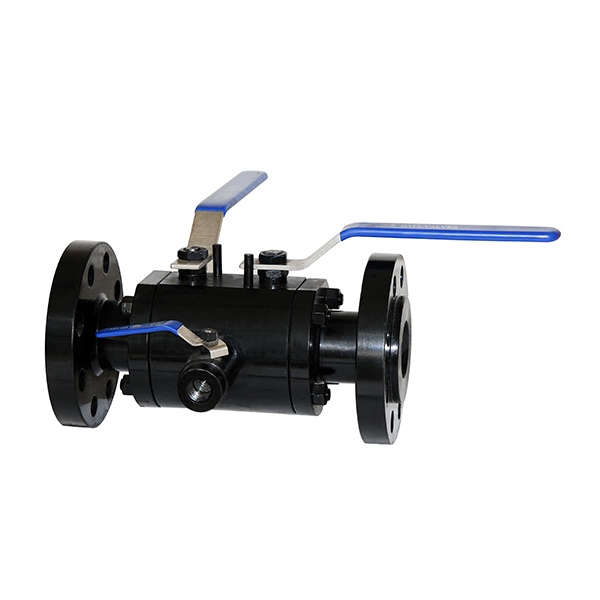
Industrial Valve Engineering & Consultancy Group
Published: August 15, 2026 | Last Technical Review: August 15, 2026
Post time: Aug-15-2026