

In modern process automation, power plants, water management, and heavy industrial facilities, fluid control efficiency directly dictates operational safety and plant uptime. Transitioning from manual wheel-operated valves to automated flow control systems reduces human error, accelerates emergency shutdown response times, and allows centralized pipeline monitoring.
Among the various automated flow control technologies available today, an Electric Actuator Valve stands out as the premier solution for precise torque management, clean energy operation, and complex control system integration.
This technical guide provides piping engineers, plant managers, and procurement specialists with an end-to-end breakdown of electric actuator valves—focusing on operational mechanics, major valve configurations such as the Electric Actuator Gate Valve, selection criteria, and the commercial advantages of sourcing directly from our factory in China.
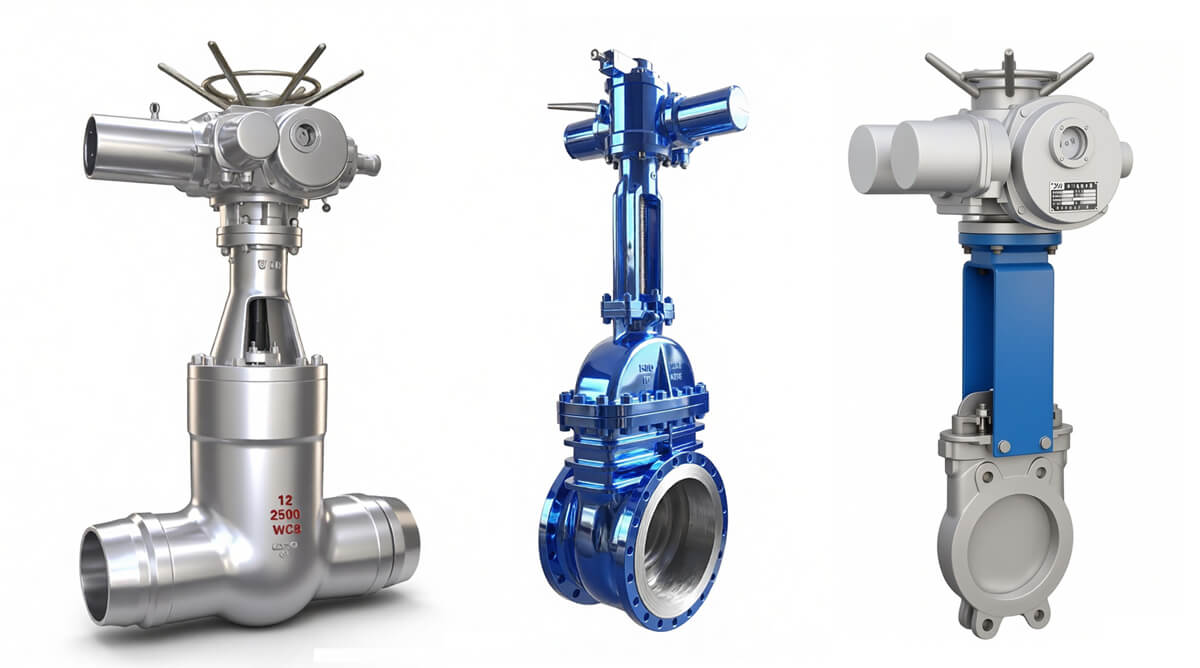
What Is an Electric Actuator Valve?
An electric actuator valve is an automated valve assembly comprising a mechanical valve body (such as a gate, globe, ball, or butterfly valve) mated to an electric motor-driven actuator via an ISO 5211 mounting flange.
Unlike pneumatic or hydraulic systems that depend on compressed air networks or fluid pumps, an electric actuator utilizes AC or DC electric power to drive a gear train. This gearbox converts rotational motor torque into linear motion (for rising stems) or quarter-turn rotary motion (90°) to actuate the internal valve disc, wedge, or ball.
+-------------------------------------------------------------+
| Electric Actuator (Motor & Gear train)                      |
| - Terminal Box / DCS Interface (Modbus, 4-20mA)             |
| - Manual Override Handwheel                                 |
+-------------------------------------------------------------+
              | ISO 5211 Mounting Interface |
+-------------------------------------------------------------+
| Valve Body (Gate, Globe, Ball, etc.)                        |
| - Pressure-Retaining Shell (API / ASME Standards)           |
| - Bi-Directional Seating (Stellite / Hardfaced)             |
+-------------------------------------------------------------+
Key Components of an Electric Actuator Assembly
- 1. Electric Motor: High-torque, reversible motor engineered for frequent start-stop cycles without overheating (Duty Class C or D).
- 2. Reduction Gear Train: Planetary or worm gear transmission that steps down motor speed to increase output torque and provide self-locking protection against fluid back-driving.
- 3. Limit & Torque Switches: Electromechanical or optical sensors that signal exact open/close positions and cut motor power when preset torque thresholds are exceeded.
- 4. Control Module: Intelligent electronics supporting ON/OFF switching, modulating position control, and digital fieldbus communication protocols.
- 5. Manual Override Handwheel: A declutchable handwheel that allows manual valve operation during emergency power failure.
Electric Actuator Ball Valve Electric Actuator Butterfly Valve
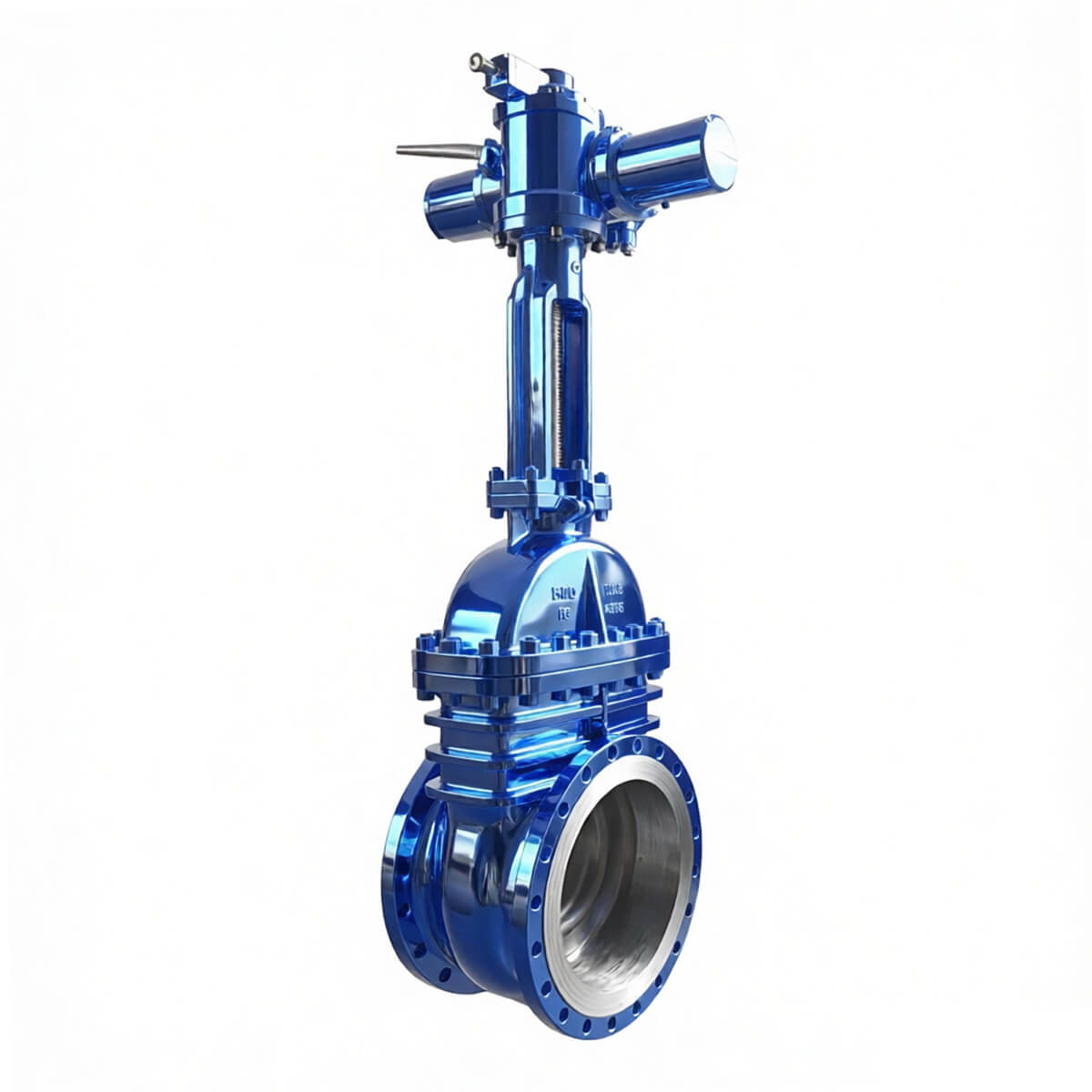
Spotlight on the Electric Actuator Gate Valve
While electric actuators are mounted on various valve bodies, the electric actuator gate valve remains the workhorse for high-pressure, large-diameter pipeline isolation.
Why Electrify a Gate Valve?
Integrating a multi-turn electric actuator solves operational bottlenecks like high differential pressure and the need for multiple operators on large-diameter pipelines.
- High Torque Output: Effortlessly overcomes high differential line pressure.
- Precise Multi-Turn Travel Control: Accurate encoder feedback prevents over-torquing.
- Zero-Leakage Isolation: Guaranteed API 598 bubble-tight performance.
| Parameter | Specification |
|---|---|
| Size Range | DN50 to DN1500 (2″ to 60″) |
| Pressure Class | ASME Class 150 to 2500 |
| Design Standards | API 600, API 6D, ASME B16.34 |
Key Advantages of Electric Actuator Valves
- Lower Infrastructure Costs: No air compressors or pneumatic piping required.
- Self-Locking Gear Train: Holds position without drawing power.
- Seamless DCS Integration: Native support for digital fieldbus protocols.
- Precise Position Control: Modulating accuracy up to 0.1%.
- Environmentally Clean: No oil-mist emissions or exhaust noise.
Primary Industrial Applications
- Power Generation Plants
- Oil & Gas Downstream & Midstream
- Municipal Water & Wastewater
- Chemical & Petrochemical
Technical Selection & Procurement Guide
PROCUREMENT CHECKLIST
1. Operating Media & Temp: (Steam, Oil, Water / -29°C to 425°C)
2. Differential Pressure: (Determines required actuator torque)
3. Voltage / Power: (3-Phase 380V, 1-Phase 220V, 24V DC)
4. Control Interface: (On/Off vs 4-20mA Modulating)
5. Hazardous Area Rating: (Weatherproof IP68 vs ATEX Ex d IIC)
1. Sizing Actuator Torque & Safety Factors
Always apply a 20%–30% safety margin above the valve’s maximum break-torque requirement.
2. Electrical Power & Voltage Compatibility
3-Phase AC is recommended for heavy-duty multi-turn applications; Single-Phase or 24V DC is ideal for smaller quarter-turn valves.
Material & Technical Comparison
| Feature | Electric | Pneumatic |
|---|---|---|
| Power Source | Electricity | Compressed Air |
| Control Range | Superior | Limited |
Why Source from Our Factory in China
- Integrated Assembly: Valve and actuator calibrated under one roof.
- Rigorous Quality Control: ISO 9001, CE/PED, and API certified testing.
- Full Material Traceability: Complete documentation and MTRs provided.
Conclusion
An electric actuator valve is an indispensable component of modern industrial automation. By choosing our experienced manufacturer, OEM factory, and global supplier team in China, you gain access to customized engineering and competitive direct factory pricing.
Contact us today for a quotation, technical selection support, or to schedule a factory visit.
Post time: Sep-14-2026