

Choosing between PPL soft seats and Stellite metal seats for 200‑550°C thermal oil/steam? Learn engineering criteria, cost savings (up to 60%), real case study, and how to avoid seat deformation. Get free technical evaluation from a verified China ball valve manufacturer.
- 1. The High‑Temperature Challenge
- 2. PPL vs. Metal‑Seated – Quick Comparison
- 3. PPL Seats: The 200–280°C Sweet Spot
- 4. Metal Seats: When Temperatures Exceed 280°C
- 5. Critical Engineering Design Factors for Thermal Oil & Steam
- 6. Real‑World Retrofit Case Study – 60% Cost Reduction
- 7. 4‑Step Sourcing Checklist from China
- 8. Frequently Asked Questions
- 9. Get Expert Support for Your Project
1. The High‑Temperature Challenge
Operating thermal oil loops or high‑pressure steam distribution networks ranks among the most punishing duties for any high‑temperature ball valve. When process temperatures range from 200°C to 550°C, ordinary valves fail fast—and fail expensively.
Thermal cycling induces relentless mechanical stress on internal components. Conventional soft seats (pure PTFE or glass‑filled RPTFE) begin to yield, creep, and permanently deform above 180°C. Once the seat ring loses dimensional stability, steam cut‑through occurs or thermal oil leaks into the body cavity, creating safety hazards and unplanned shutdowns.
OPERATING TEMPERATURE RANGE

0°C        180°C       280°C                  550°C+
|-----------|-----------|------------------------|
PTFE/RPTFE     PPL         Metal‑Seated
(Standard)   (Optimal)     (Hard‑Faced)
Yet over‑specifying is not the answer. Many procurement teams instinctively choose metal‑seated valves for any service above 200°C, assuming it is the only safe route. This often inflates capital expenditure by 300%–400% without delivering real benefits for moderate‑temperature applications.
The engineering sweet spot lies in understanding the boundary between PPL (Polyphenylene Phenylate) soft seats and hard‑faced metal seats—balancing zero‑leakage sealing, long‑term reliability, and project budget.
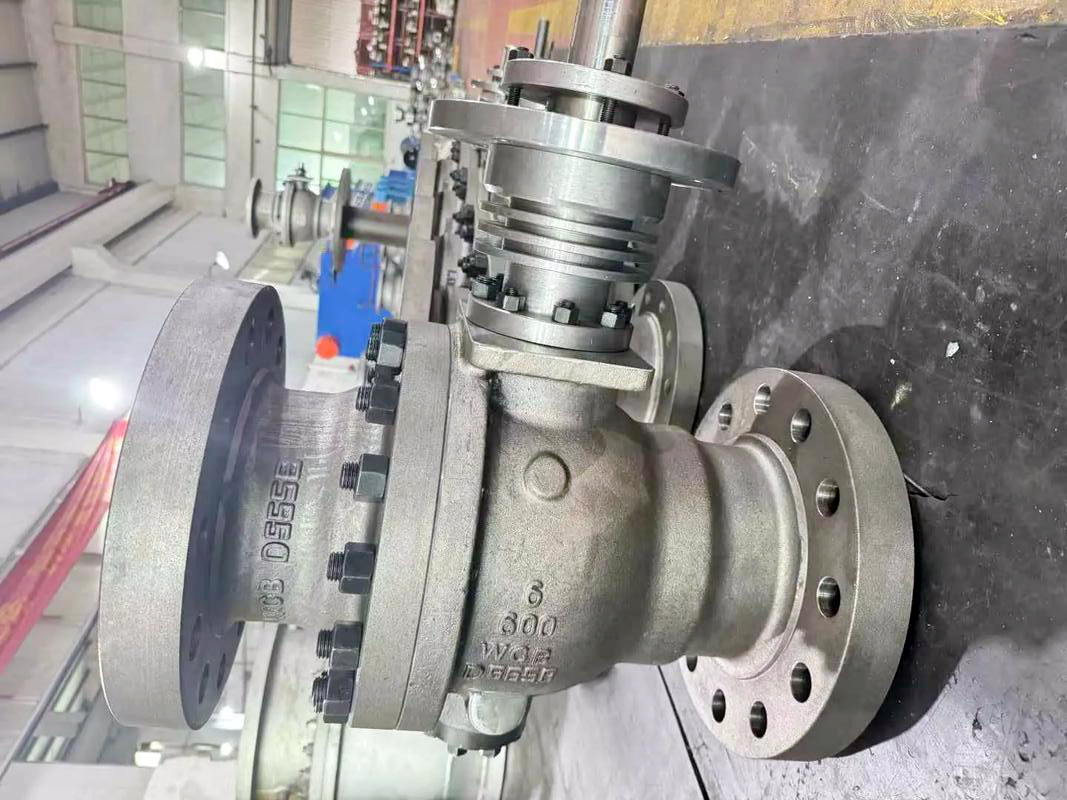
2. PPL vs. Metal‑Seated Ball Valves – Quick Comparison
| Parameter | PPL‑Seated Ball Valves | Metal‑Seated Ball Valves |
|---|---|---|
| Max Continuous Temp | Up to 280°C (536°F) | Up to 550°C+ (1022°F+) |
| Max Pressure Rating | ASME Class 150 – 600 | ASME Class 150 – 2500 |
| Sealing Capability | API 598 / ISO 5208 Rate A (bubble‑tight zero leakage) | API 598 / ISO 5208 Rate C/D or ANSI/FCI 70‑2 Class IV–VI |
| Media Compatibility | Saturated steam, hot water, thermal oil, light chemicals | Superheated steam, synthetic HTFs, abrasive slurries |
| Operating Torque | Moderate (smooth actuation) | High (requires Belleville springs and larger actuators) |
| Relative Cost Index | 1.0x (baseline) | 2.5x – 4.0x |
3. PPL Seats: The 200–280°C Sweet Spot
What is PPL?
PPL (Polyphenylene Phenylate) is a high‑performance thermoplastic engineered for elevated thermal endurance. Unlike PTFE (softens at 180°C) or RPTFE (limited to 220°C), PPL retains mechanical hardness, compressive strength, and creep resistance up to 280°C.
Ideal Applications
- Saturated steam systems – main headers and branch lines up to Class 300/600.
- Thermal oil loops – heat exchanger circuits using mineral or synthetic fluids (e.g., Dowtherm™, Therminol®) below 280°C.
- Boiler feedwater – high‑pressure hot water requiring tight shut‑off.
Why Choose PPL Over Metal Seats in This Zone?
- True bubble‑tight sealing – PPL’s elastic memory allows API 598 Rate A zero leakage; metal seats inherently allow some seepage.
- Substantial cost savings – A 4‑inch Class 300 trunnion PPL valve typically costs 60% less than its metal‑seated equivalent.
- Lower actuation costs – lower friction reduces actuator size, saving on skid assembly.
4. Metal Seats: When Temperatures Exceed 280°C
Hard‑Facing Technology
Above 280°C, only metallic seats survive. Advanced surface hardening is essential:
- Stellite® (cobalt‑based) – excellent thermal shock and galling resistance, ideal for steam.
- Chrome carbide via HVOF – hardness 68–70 HRC, impervious to abrasive particles in thermal oil.
- Tungsten carbide – extreme wear resistance up to 400°C.
+-------------------------------------------------------------+
|                     BALL & SEAT TRIM                        |
|  +-------------------------------------------------------+  |
|  | Base: ASTM A351 CF8M / A105                           |  |
|  | Coating: Stellite / HVOF Chrome Carbide               |  |
|  | Finishing: Precision CNC mate‑lapping (paired)        |  |
|  +-------------------------------------------------------+  |
+-------------------------------------------------------------+
Belleville Spring Compensation
Thermal expansion is a key challenge. During hot startup, the ball expands faster than the body. Professional high‑temperature designs incorporate Belleville spring‑loaded seats that maintain sealing pressure while allowing axial movement to accommodate thermal shock.
Typical Services (>280°C)
- Superheated steam mains in power plants.
- Petrochemical cracking furnaces and asphalt heating (300–450°C).
- Abrasive catalyst lines with entrained solids.
5. Critical Engineering Design Factors for Thermal Oil & Steam
Seat material is only half the story. These secondary factors are equally vital:
1. Anti‑Blowout Stem & Live‑Loaded Packing
Thermal cycling loosens conventional graphite packing over time. Specify live‑loaded packing with Belleville washers that constantly compress the graphite rings, maintaining seal force without manual tightening.
[ Gland Flange Nut ]
||
[ Belleville Washer Stack ]  ← dynamic compression
||
[ Gland Follower ]
||
[ Expanded Graphite Packing ]
||
[ Valve Stem ]
2. Cavity Pressure Relief (Critical for Thermal Oil)
Thermal fluids expand significantly when trapped in the closed body cavity. Without relief, pressure can rupture the body or blow out seats. Specify self‑relieving seats (single piston effect) or internal equalisation holes.
3. Fire‑Safe Design (API 607 / ISO 10497)
For combustible thermal oils, fire‑safe valves incorporate a secondary metal‑to‑metal backup seal. If the PPL seat burns during a fire, line pressure drives the ball against this metal lip to limit downstream leakage.
6. Real‑World Retrofit Case Study – 60% Cost Reduction
- Total cost: $26,000 – saving $38,000 (≈60%) vs. the metal‑seated alternative.
- Delivery: 3 weeks (vs. 12 weeks).
- Field performance: Over 36 months of continuous heating cycles with zero seat maintenance, zero stem leakage, and 100% bubble‑tight shut‑off during annual tests.
7. 4‑Step Sourcing Checklist from China
When procuring high‑temperature valves from a China ball valve manufacturer, ensure your QA team verifies these benchmarks:
+-----------------------------------------------------------------------------------+
|                           HIGH‑TEMP SOURCING CHECKLIST                            |
+-----------------------------------------------------------------------------------+
| [1] Verify Material MTRs (EN 10204 3.1) for WCB/CF8M bodies.                      |
| [2] Require high‑temperature pressure & shell tests per API 598.                  |
| [3] Audit coating hardness (≥68 HRC) for Stellite/HVOF.                           |
| [4] Inspect export packaging with protective flange caps and stem bracing.        |
+-----------------------------------------------------------------------------------+
Step 1 – Material Traceability – Authentic Mill Test Reports with heat numbers stamped on the body (ASTM A216 WCB or A351 CF8M).
Step 2 – High‑Temp Testing – Standard ambient hydrotests may not reveal seat behaviour at 250°C. Ask for hot‑gas or thermal‑cycling tests on sample batches.
Step 3 – Coating Hardness – For metal seats, HVOF hardness records must show ≥68‑70 HRC to resist galling and scoring.
Step 4 – Export Packaging – Heavy‑duty plywood crates with custom foam bracing to prevent stem bending during sea freight.
8. Frequently Asked Questions
No. 300°C exceeds PPL’s degradation threshold (280°C). Thermal hardening and cracking will cause rapid seal failure – you must use a metal‑seated valve.
Metal‑seated valves are typically rated to ISO 5208 Rate C/D or ANSI/FCI 70‑2 Class IV–VI. For critical steam shut‑off, specify Class VI (bubble‑tight equivalent with lapped metal seats).
Cold condensate in lines causes severe thermal shock and water hammer when hot steam arrives. Proper steam trapping and erosion‑resistant trims (PPL or Stellite) prevent start‑up damage.
Flexible expanded graphite with braided carbon fibre anti‑extrusion rings is required up to 550°C. PTFE packing must never be used above 200°C.
9. Get Expert Support for Your Project
Designing a thermal loop, upgrading a boiler skid, or tendering high‑temperature valves? Avoid over‑specification while ensuring 100% safety.
- ✓ Upload your BOM – Send line temperature, pressure, and fluid data to NSW Ball Valve Manufacturer for a free technical evaluation.
- ✓ Request material datasheets – Complete mechanical specs for PPL and Stellite trims.
- ✓ Direct factory pricing – Competitive wholesale rates from a verified China ball valve manufacturer.
JSON‑LD Structured Data (Optimised)
Post time: Jul-31-2026