

What is a Pneumatic Ball Valve
Pneumatic Ball Valves, also known as air-actuated ball valves, are essential components in various industrial fluid control systems. Their compact design, quick 90‑degree operation, and reliable sealing make them ideal for a wide range of applications where fast shut‑off or remote control is required. This article provides a comprehensive overview of pneumatic ball valves, including their design, working principle, types, advantages, applications, installation, maintenance, and troubleshooting. By the end, readers will have a thorough understanding of this versatile valve type and practical knowledge for selection and on‑site use.
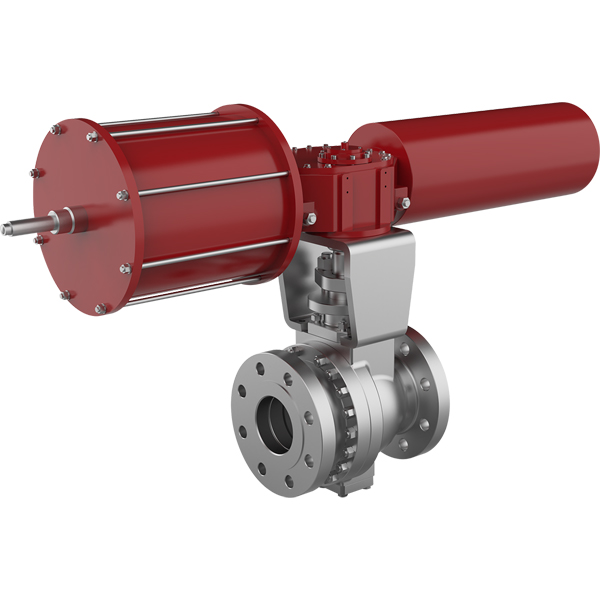
1. Introduction to Pneumatic Ball Valves
Pneumatic Ball Valves are flow control devices that use compressed air as the power source to open, close, or partially throttle the valve. They consist of a ball valve body, a spherical closure element (the ball), a pneumatic actuator, and optional accessories such as positioners, solenoid valves, or limit switches. The ball contains a circular through‑hole (bore) along its axis; by rotating the ball 90 degrees, the flow path is either fully aligned (open), fully blocked (closed), or partially opened for throttling in some designs. Compared to manual ball valves, pneumatic versions enable automation, faster response (typically 0.5–2 seconds per cycle), and remote operation in hazardous or hard‑to‑reach areas.
2. Design and Working Principle
The design of a pneumatic ball valve evolved from the globe valve but with significant improvements in flow capacity and cycle speed. The main components include:
Valve Body: Typically made of cast iron, stainless steel (CF8, CF8M), brass, or other materials depending on the media. Stainless steel is preferred for corrosive or high‑purity applications.
Ball: A hollow sphere with a precision‑machined through‑hole. When rotated 90°, the hole aligns with the inlet/outlet ports for flow, or misaligns to seal against the seats.
Pneumatic Actuator: Converts compressed air pressure (usually 4–8 bar) into mechanical torque. Common types include rack‑and‑pinion and scotch‑yoke actuators. The actuator consists of a cylinder, piston(s), and a drive shaft.
Seals (Seats): Critical for leak‑tight shut‑off. Soft seats (PTFE, TFM, PEEK) are used for general purposes; metal seats (stainless steel with hard facing) for high‑temperature or abrasive media.
Working principle: When compressed air enters the actuator’s center port (for double‑acting types), the pistons move outward, rotating the ball 90° to open. Air entering the end ports reverses the motion to close. In single‑acting (spring‑return) actuators, air pressure overcomes spring force to open or close; upon air loss, the spring returns the valve to a preset safe position (normally open or normally closed). This failsafe feature is crucial for emergency shutdown systems.
3. Types of Pneumatic Ball Valves
Pneumatic ball valves can be classified based on various criteria. Understanding these types helps in selecting the correct valve for specific operating conditions.
→ By Structure
• Two‑piece design: The body consists of two parts. Easier to maintain and replace seats. Common in general industrial applications.
• Three‑piece design: The center body section contains the ball and seats, clamped between end caps. Allows in‑line maintenance without removing piping. Ideal for frequent cleaning (e.g., food, pharmaceutical).
• One‑piece design: Reduced leakage paths and compact size, but harder to repair. Often used in low‑cost, non‑critical applications.
→ By Seal Material
• Soft‑sealed valves: Use PTFE, TFM, or Nylon seats. Provide tight shut‑off (up to Class VI leakage). Temperature range typically –20°C to +200°C. Suitable for water, oil, gas, and mild chemicals.
• Hard‑sealed valves: Metal‑to‑metal seats (e.g., 304/316 stainless steel with stellite or tungsten carbide coating). Withstand high temperatures (up to 500°C or more) and abrasive media such as slurry or catalysts.
→ By Flow Path
• Straight‑through (2‑way): Most common, for on/off or simple diversion.
• Three‑way (L‑port or T‑port): Used for mixing or diverting flow. L‑port changes flow direction; T‑port can combine two inlets or split one inlet into two outlets.
• Angle valves: For specific piping layouts where a 90° turn is required, reducing fitting needs.
→ By Actuator Type
• Double‑acting actuator: Air pressure moves the piston in both directions. Requires air supply for both opening and closing. Faster cycle speed.
• Single‑acting (spring‑return) actuator: Air moves the piston one way; a spring returns it. Provides failsafe position upon loss of air or power. Recommended for safety‑critical services.
4. Advantages of Pneumatic Ball Valves
Pneumatic ball valves offer several quantifiable advantages over other valve types (gate, globe, or electric ball valves):
• Quick operation: The 90‑degree rotation enables full open/close cycles in 0.3–2 seconds (depending on actuator size and air pressure). Much faster than electric actuators (often 5–20 seconds).
• Compact design: Low height‑to‑bore ratio allows installation in tight spaces, such as skid‑mounted process systems or marine engine rooms.
• Low fluid resistance: Full‑bore design (ball bore ID nearly equal to pipe ID) creates minimal pressure drop – typically less than 0.1 bar at nominal velocity. This reduces pumping energy and operating costs.
• Reliable sealing: Modern soft seats achieve bubble‑tight shut‑off (less than 0.001 ml/min leakage per inch of orifice). Hard seals provide reliable isolation even after thousands of cycles with particulates.
• Versatility: Compatible with water, oil, gas, steam, acids, bases, and even some abrasive slurries when using lined bodies or hardened balls.
• Easy maintenance: Three‑piece designs allow seat and ball replacement in under 15 minutes without removing the valve from the pipeline – a significant downtime reduction.
• Remote and automated control: Easy integration with PLC, DCS, or simple solenoid valves. Low air consumption (typically 0.5–2 liters per stroke for small actuators).
5. Applications of Pneumatic Ball Valves
Pneumatic ball valves offer several quantifiable advantages over other valve types (gate, globe, or electric ball valves):
• Quick operation: The 90‑degree rotation enables full open/close cycles in 0.3–2 seconds (depending on actuator size and air pressure). Much faster than electric actuators (often 5–20 seconds).
• Compact design: Low height‑to‑bore ratio allows installation in tight spaces, such as skid‑mounted process systems or marine engine rooms.
• Low fluid resistance: Full‑bore design (ball bore ID nearly equal to pipe ID) creates minimal pressure drop – typically less than 0.1 bar at nominal velocity. This reduces pumping energy and operating costs.
• Reliable sealing: Modern soft seats achieve bubble‑tight shut‑off (less than 0.001 ml/min leakage per inch of orifice). Hard seals provide reliable isolation even after thousands of cycles with particulates.
• Versatility: Compatible with water, oil, gas, steam, acids, bases, and even some abrasive slurries when using lined bodies or hardened balls.
• Easy maintenance: Three‑piece designs allow seat and ball replacement in under 15 minutes without removing the valve from the pipeline – a significant downtime reduction.
• Remote and automated control: Easy integration with PLC, DCS, or simple solenoid valves. Low air consumption (typically 0.5–2 liters per stroke for small actuators).
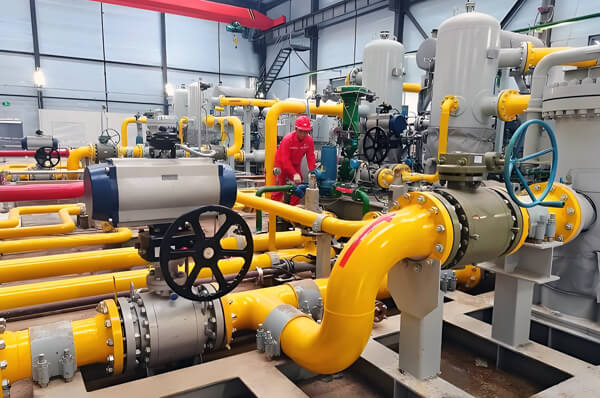
6. Installation and Commissioning
Proper installation and commissioning are crucial for reliable operation and long service life. Based on field service experience, follow these steps:
→ Location Selection
• Install the valve in an accessible area for inspection and maintenance. Avoid locations with excessive vibration, corrosive fumes, or direct water spray unless the actuator has appropriate IP rating (IP65 or higher recommended).
• Mount the actuator upright or as specified by the manufacturer. Horizontal mounting is acceptable for most rack‑and‑pinion actuators, but verify that drain ports (if any) face downward.
→ Pipeline Preparation
• Before installation, flush the pipeline to remove welding slag, metal chips, sand, or other debris. Debris is the #1 cause of seat damage and ball scratching.
• For threaded end valves, use PTFE tape or pipe sealant sparingly – excess sealant can enter the valve and jam the ball.
→ Valve Installation
• Check that the valve’s pressure and temperature ratings match the system conditions.
• Follow the manufacturer’s torque values for bolting. Over‑tightening can distort the body and cause seal leakage.
• For flanged valves, use proper gaskets and a crossing pattern when tightening bolts.
→ Actuator and Air Supply Connection
• Connect clean, dry, and lubricated compressed air (if required by actuator type). Install a filter‑regulator‑lubricator (F.R.L) unit upstream to prevent moisture and particulates from damaging internal seals.
• Use appropriate tubing size (typically 6 mm or 8 mm OD for small actuators) and ensure all fittings are leak‑free. A small air leak can cause slow cycling or incomplete stroke.
→ Commissioning
• Manually override (if available) or apply low air pressure to slowly operate the valve. Verify open/close positions match the actuator’s indicators.
• Cycle the valve 3–5 times while observing for smooth movement and listening for unusual noises (e.g., grinding or squeaking).
• Check for external leakage at stem seals, body joints, and pipe connections using soap solution or a leak detector.
• For critical services, perform a seat leakage test at the rated differential pressure.
7. Maintenance and Troubleshooting
Regular maintenance and systematic troubleshooting extend the life of pneumatic ball valves and prevent unplanned downtime.
Preventive Maintenance (typical intervals)
• Inspection (monthly or quarterly): Check for visual signs of corrosion, external leaks, loose mounting bolts, and actuator air line condition.
• Lubrication (every 6 months or after 100,000 cycles): Apply manufacturer‑recommended grease to the actuator’s rack and pinion, and to the valve stem. Use food‑grade grease for sanitary applications.
• Cleaning (as needed): Remove external dirt and debris from the actuator and valve body. For dirty media, consider a periodic flush cycle with clean fluid.
• Seal replacement (every 1–3 years depending on cycle count and media): Replace soft seats, stem seals, and body gaskets if leakage exceeds acceptable limits.
Common Troubleshooting Guide
| Symptom | Possible Cause | Corrective Action |
|---|---|---|
| Valve fails to open or close | No air supply; clogged solenoid valve; actuator piston seized | Check air pressure (min. 4 bar). Clean or replace solenoid. Disassemble actuator and inspect for rust or debris. |
| Slow operation | Low air pressure; undersized tubing; internal actuator leakage | Increase pressure (max. 8 bar). Use larger tubing. Replace actuator seals. |
| External leakage from stem | Worn stem seal (V‑ring or O‑ring) | Tighten gland packing (if adjustable) or replace seal. |
| Leakage through closed valve | Damaged ball or seat; debris preventing sealing | Cycle valve a few times to dislodge debris. If leak persists, disassemble and inspect ball/seat. |
| Actuator does not return (single‑acting) | Broken spring; excessive friction or pressure | Replace spring assembly. Check for misalignment or lack of lubrication. |
8. Trends and Future Developments
The pneumatic ball valve industry is continuously evolving to meet higher demands for efficiency, connectivity, and environmental compliance. Current and future trends include:
→ Advanced Materials
• New polymer blends (e.g., modified PTFE with carbon fiber or PEEK) provide better wear resistance and higher pressure limits.
• Ceramic balls and liners for extreme abrasion (e.g., mining slurry, fly ash).
• Corrosion‑resistant coatings (Ni‑P, electroless nickel, HVOF tungsten carbide) for balls and seats, extending service life in aggressive environments.
→ Smart Valves (IIoT Ready)
• Integrated position sensors (contactless, 4‑20 mA feedback) and temperature/vibration sensors.
• Communication via IO‑Link, Profibus, or wireless protocols (LoRaWAN, Bluetooth) for real‑time status monitoring and predictive maintenance.
• Self‑diagnosing actuators that report seal wear, cycle count, and air consumption to a central control system.
→ Energy Efficiency and Sustainability
• Optimized actuator designs (e.g., reduced internal dead volume) lower compressed air consumption per cycle by 20–30%.
• Lightweight composite bodies (e.g., nylon with glass fiber) for low‑pressure applications, reducing material and transportation emissions.
• Leak‑detection algorithms that alert operators to small seat leaks before they become major losses.
→ Customization and Modular Design
• Manufacturers offer factory‑assembled packages (valve + actuator + solenoid + positioner) with digital configuration tags.
• Quick‑change trim sets allow converting a soft‑seated valve to metal‑seated without replacing the entire body.
These developments will further enhance the reliability, efficiency, and intelligence of pneumatic ball valves, making them even more attractive for new plants and retrofits.
Conclusion
Pneumatic Ball Valves are versatile and reliable components in industrial fluid control systems. Their compact design, quick 90‑degree operation, and reliable sealing make them ideal for a wide range of applications from petrochemical to food processing. By understanding their design, working principle, types, advantages, applications, installation, maintenance, and troubleshooting, engineers and maintenance teams can ensure reliable and efficient operation. As technology advances, pneumatic ball valves will continue to evolve – offering improved materials, smart connectivity, lower energy consumption, and greater customization – to meet the changing needs of modern automated plants.
Recommendation: Add a FAQ section as structured data. Example Q&A:
Q: What is the typical pressure range for a pneumatic ball valve?
A: Most industrial pneumatic ball valves are rated from PN16 to PN63 (or Class 150 to Class 600). Higher pressures up to 2500 lb are available with forged bodies and metal seats.
Q: How do I choose between double‑acting and spring‑return actuator?
A: Select double‑acting for continuous cycling applications where air supply is always available. Choose spring‑return for emergency shutdown or fail‑safe operation (e.g., burner lines, tank blanketing).
Post time: Apr-13-2025