

Navigating EPA consent decrees or EU REACH environmental compliance? Compare API 641 vs. ISO 15848-1 fugitive emission standards to specify low-emission quarter-turn ball valves with confidence.
Quick Summary: What is the main difference between API 641 and ISO 15848-1?
API 641 is a strict pass/fail American standard tailored specifically for quarter-turn valves using methane (CH₄), capping leakage at ≤ 100 PPMv with zero gland packing adjustments allowed. ISO 15848-1 is a flexible global classification system (Classes A, B, C) using methane or helium, accommodating tiered mechanical endurance levels (2,500 to 10,000+ cycles) and allowing documented packing adjustments.
1. Introduction: The High-Stakes Fight Against Fugitive Emissions
In modern petrochemical refining and chemical processing plants, valve stem packings and body joints account for up to 60% of all fugitive volatile organic compound (VOC) emissions. Beyond environmental compliance—such as US EPA Method 21 consent decrees or European REACH directives—uncontrolled stem leakage poses severe safety risks, accelerates product loss, and jeopardizes plant operating licenses. The International Energy Agency estimates that 30% of all methane emissions from oil and gas operations come from equipment leaks including valves.
Plant Fugitive Emissions Breakdown:
- Valve Stems: ~60%
- Flanges & Piping Joints: ~20%
- Pumps & Compressors: ~12%
- Other Components: ~8%
When engineering procurement and construction (EPC) companies or plant maintenance teams specify low-emission (Low-E) quarter-turn ball valves, they encounter two primary international type-testing standards: API 641 and ISO 15848-1.
Selecting the wrong standard or misinterpreting testing classifications can lead to rejected valve shipments, failed field EPA audits, or unnecessary over-specification costs. In this guide, we draw on our engineering experience with third-party certified low-E valve projects to break down the core differences, testing protocols, and stem-packing architecture required to achieve verified leakage compliance.
2. API 641 vs. ISO 15848-1: Quick Comparison Matrix
While both standards evaluate valve leakage over mechanical and thermal cycles, their philosophies differ. API 641 is a rigid, pass/fail American standard tailored for quarter-turn valves in oil and gas. ISO 15848-1 is a flexible, multi-tiered global classification system using endurance, tightness, and temperature classes.
| Parameter | API 641 (First Edition) | ISO 15848-1 (2015/A1 Revision) |
|---|---|---|
| Primary Valve Scope | Quarter-Turn Valves (Ball, Butterfly, Plug) | All Industrial Valves (Isolation & Control) |
| Test Gas Media | Methane (CH₄) — Minimum 97% Purity | Helium (He) or Methane (CH₄) |
| Measurement Method | EPA Method 21 Sniffing (PPMv) | Vacuum / Global Flushing or Sniffing (mg·s⁻¹·m⁻¹) |
| Pass/Fail Threshold | ≤ 100 PPMv (Strict Pass/Fail) | Tiered (Class A, B, C) |
| Mechanical Cycles | 610 Cycles (Static & Dynamic) | 2,500 to 10,000+ Cycles (CO1, CO2, CO3) |
| Thermal Cycles | 3 Cycles (Ambient to 260°C / 500°F) | Multi-Temperature Tiers (–196°C to +400°C+) |
| Packing Adjustment | Prohibited during entire test | Allowed (must be documented & classified) |
3. API 641 Certification: Test Parameters and Requirements
Developed by the American Petroleum Institute, API 641 (“Type Testing of Quarter-Turn Valves for Fugitive Emissions”) was created specifically to eliminate the historic misuse of multi-turn standards (like API 624) on quarter-turn ball valves. The standard was first issued in October 2016 and has since been updated to the 2023 edition.
Key API 641 Test Parameters:
- Target Gas: Methane gas (CH₄) at a test pressure between 100 psig minimum and 600 psig maximum.
- Thermal & Mechanical Cycling: The test subjects the valve to 610 mechanical cycles interspersed with 3 thermal cycles from ambient temperature up to 260°C (500°F).
- Zero Adjustments Allowed: The test lab cannot tighten stem gland bolts during the test. If leakage exceeds 100 PPMv at any point, the design fails.
- Mandatory API 622 Stem Packing: To earn API 641 certification, the valve stem packing material must have previously passed API 622 (pure packing material testing for fugitive emissions, corrosion, and thermal degradation).
4. ISO 15848-1 Classification: Classes A, B, C and CO1–CO3 Explained
ISO 15848-1 is widely specified across European, Asian, and Middle Eastern petrochemical projects. Rather than a single pass/fail line, ISO 15848-1 allows end-users to specify a precise classification code based on operational requirements:
Classification Code Format: ISO 15848-1 [Tightness Class] – [Endurance Class] – [Temperature Class] – [Test Medium]
1. Tightness Classes (Leakage Rate Limits)
- Class A (≤ 10⁻⁶ mg·s⁻¹·m⁻¹ stem perimeter): The most stringent class, required for toxic services (benzene, H₂S, HF). Class A valves leak less than 10 ppm methane equivalent.
- Class B (≤ 10⁻⁴ mg·s⁻¹·m⁻¹ stem perimeter): The standard benchmark for high-quality chemical process ball valves. For methane testing, BM ≤ 100 ppm; for helium, BH ≤ 1.0×10⁻⁴ mg/(s·m).
- Class C (≤ 10⁻² mg·s⁻¹·m⁻¹ stem perimeter): Basic industrial low-emission threshold. For methane, CM ≤ 500 ppm.
2. Endurance Classes (Isolation Valve Mechanical Cycles)
- CO1: 2,500 Cycles (Baseline qualification for quarter-turn ball valves)
- CO2: 5,000 Cycles
- CO3: 10,000 Cycles
5. Engineering Low-E Ball Valves: Stem Packing Architecture
Achieving ≤ 100 PPMv emission compliance cannot be accomplished by simply over-torquing gland bolts. Excessive torque causes high operating torque, seat destruction, and premature packing wear. An engineered low-emission ball valve optimizes the entire stem sealing chamber.
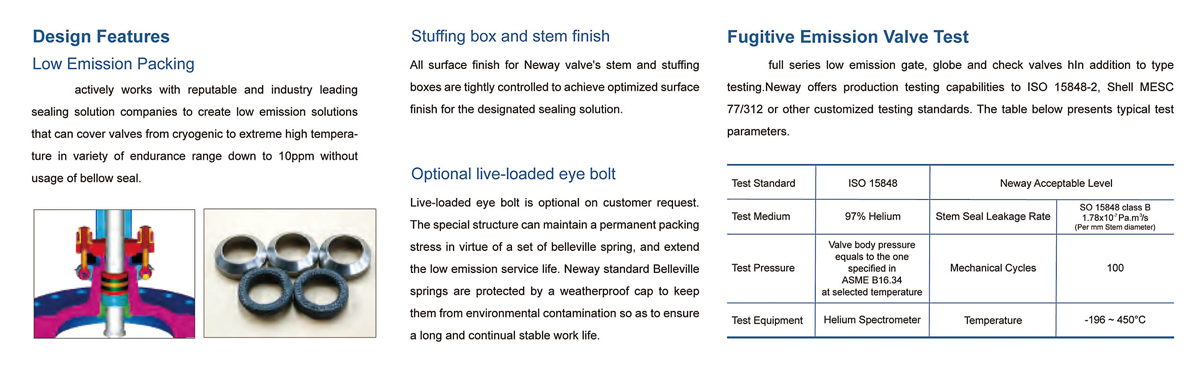
Figure 1: Cross-section of a Low-E ball valve stem packing with dynamic Belleville spring assembly.
(Image: live-loaded stem packing diagram with Belleville washers, gland follower, anti-extrusion rings, and polished stem)
Key Structural Pillars of Low-E Ball Valves:
- Live-Loaded Belleville Spring Assemblies: Stainless steel Belleville disc spring stacks maintain constant dynamic compression on the packing set, automatically compensating for thermal expansion and packing relaxation during temperature swings. Proper stacking configuration of disc springs (series or parallel) is essential to generate the right preload force for each valve size and pressure class. This approach extends re-packing intervals from 2–3 years to 5–10 years.
- Ultra-Smooth Stem Surface Finish: Valve stems must be CNC ground and polished to a surface roughness of Ra < 0.4 µm (16 µin). Rough stems act like files, shredding graphite fibers during rotation.
- Die-Formed Flexible Graphite Packing Sets: Utilizing API 622 certified graphite packing with braided Inconel-wire reinforced top and bottom anti-extrusion rings prevents carbon migration under pressure. Third-party tested API 622 packing sets can achieve average emission levels as low as 8 ppmv.
- Machined Stuffing Box Tolerances: Tight dimensional tolerances between the stem, stuffing box wall, and gland follower eliminate lateral stem play and side-loading wear.
6. Real-World Case Study: European Chemical Complex Low-E Valve Upgrade
Background
A multinational chemical manufacturer in Rotterdam experienced frequent VOC emissions compliance warnings on an ethylene processing skid. The plant was using standard PTFE-packed ball valves that degraded rapidly under thermal cycling between –20°C and 180°C. EPA Method 21 sniffing tests routinely recorded leakage above 800 PPMv—eight times the allowable limit.
The plant’s LDAR (Leak Detection and Repair) program identified 47 valve positions requiring immediate replacement to avoid regulatory fines and potential operating license restrictions.
Solution & Engineering Upgrade
The client required replacement valves with dual compliance (API 641 and ISO 15848-1 Class BH-CO1). Our engineering team conducted a full stem sealing analysis for each valve size and pressure class, calculating the precise Belleville spring preload required to maintain sealing force across the -20°C to 180°C temperature range.
We delivered Class 300 trunnion-mounted ball valves featuring:
- Super-finished 17-4PH stainless steel stems (Ra ≈ 0.2 µm)—50% smoother than the standard requirement.
- Live-loaded Belleville dynamic packing sets using API 622 certified graphite—third-party verified at 8 ppmv average emission.
- Precision CNC-machined body joint spiral-wound gaskets with inner/outer retaining rings.
- 100% factory helium leak testing per ISO 15848-2 on every production valve before shipment.
Results
Third-party inspection conducted by TÜV Rheinland verified methane sniffing leakage rates of less than 12 PPMv—far exceeding the 100 PPMv standard requirement and representing a 98.5% reduction from the original PTFE-packed valves.
| Metric | Before Upgrade | After Upgrade | Improvement |
|---|---|---|---|
| EPA Method 21 Leakage | >800 PPMv | <12 PPMv | 98.5% reduction |
| Packing Adjustments Required | Monthly | None in 18 months | 100% elimination |
| Environmental Compliance Warnings | Multiple | Zero | Full compliance |
The plant successfully passed all environmental audits with zero stem packing adjustments required over 18 months of continuous service. Maintenance intervals extended from monthly inspections to annual checks, delivering significant operational cost savings.
7. Procurement Checklist for Low-E Valves
When evaluating a ball valve supplier for fugitive emission compliance, we recommend reviewing these four quality control checkpoints:
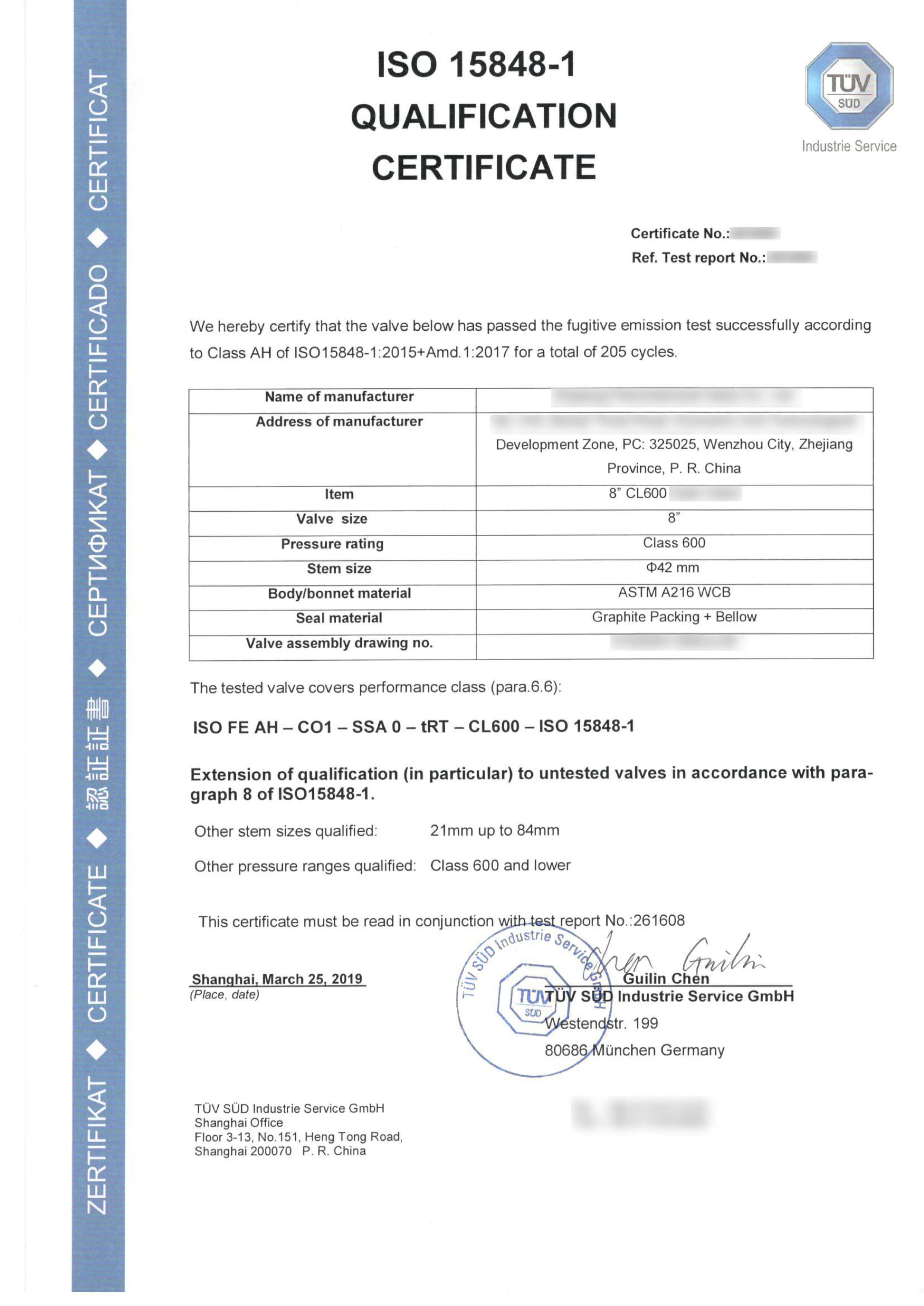
- Verify Type-Test Certificates: Request original test reports issued by recognized independent laboratories (such as TÜV, SIRA, or United Valve) explicitly stating API 641 or ISO 15848-1 test parameters. Ensure the certificate covers the specific valve size and pressure class you are procuring—do not accept extrapolation from smaller sizes.
- Audit Packing Material Data: Ensure the stem packing vendor has independent API 622 certification reports showing low weight loss and low corrosion factors.
- Inspect Factory Testing Capabilities: Confirm whether the supplier possesses in-house mass spectrometer helium leak detectors and flame ionization detectors (FID) for production line sniffing per ISO 15848-2.
- Check Stem Surface Roughness Measurements: Ensure stem surface finishes are documented during quality control inspections using calibrated profilometers.
8. Frequently Asked Questions
Q1: Can an API 624 certified valve be used in place of an API 641 valve?
No. API 624 is strictly designed for rising stem valves (gate and globe valves). Quarter-turn ball valves must be tested and certified under API 641.
Q2: Why is methane used in API 641 while ISO 15848-1 often uses helium?
Methane (CH₄) directly mirrors real-world volatile organic compounds found in oil refining and is measured in parts per million (PPMv) per EPA Method 21. Helium (He) has a smaller molecular size, making it ideal for high-sensitivity mass spectrometer testing (mg·s⁻¹·m⁻¹) in European laboratory environments.
Q3: What is the difference between ISO 15848-1 and ISO 15848-2?
ISO 15848-1 is a type-testing standard performed on prototype valves in a laboratory to qualify a design range. ISO 15848-2 governs production testing, defining sampling plans and 100% factory acceptance testing (FAT) for production valves before shipment.
Q4: Does live-loading increase the operating torque of a ball valve?
When designed correctly, live-loading maintains consistent torque rather than higher torque. By applying calculated Belleville spring pressure, the packing remains tight without requiring excessive manual bolt over-tightening. Live-loaded systems with properly matched spring rates typically increase operating torque by less than 5–8% while dramatically improving long-term sealing reliability.
9. Conclusion: Choosing the Right Standard for Your Application
Selecting between API 641 and ISO 15848-1 depends on your project’s geographic location, regulatory requirements, and operational conditions. Based on our engineering experience, here are our key recommendations:
- For US-based refinery and petrochemical projects with strict EPA oversight, API 641 certification is often non-negotiable. The “no adjustment” provision ensures the valve design can maintain sealing integrity without field intervention.
- For European and international projects with complex thermal and cycling demands, ISO 15848-1′s flexible classification system offers better alignment with actual service conditions. The tiered approach allows you to match the valve’s endurance rating to your specific operational profile.
- For critical or toxic services (benzene, H₂S, HF), we recommend specifying ISO 15848-1 Class A or B with helium testing for maximum sensitivity.
- When in doubt, specifying dual-certified valves (API 641 + ISO 15848-1) provides the broadest compliance coverage and future-proofs your procurement against changing regulatory requirements.
For project-specific recommendations, third-party test reports, or technical consultation, contact our engineering team at sales@nswvalves.com.
Post time: Aug-10-2026